The most popular posts of 2016 focus on innovative products leveraging Augmented Intelligence, analytics and advanced algorithms to enhance productivity. Another theme focused on the transformation of law libraries and the role of information professionals.1. Westlaw  answers looks a lot like AI to me. Westlaw releases major new features: and it’s all in your contract. 

2. BloombergBNA Maybe the Fault is not in the Gatekeepers but in Your Product Strategy?

3. Breaking news Thompson Reuters reveals non-material case for errors: offers customer remedies: prepare for incoming!

4. Thompson Reuters re-brands as “the answer company” leveraging Watson unveils E discovery point, practice point and perm id

5. Start Stop Survey Product Results: Ravel Judges Analytics and Wolters Kluwer’s Cheetah Voted Best Products.

6.  LexisNexis Acquires Intelligize: Intelligize +Lex Machina =A Bigger Data Play?

7. Throwing law firm intelligence out with the books?

8. American Lawyer 2016 library survey: libraries are still shrinking: please rename the survey in 2017 so you can ask new questions?

9. Lex Machina Launches New “Easy Button” Analytics Apps To Compare Judges, Courts and Law Firms

10. Practice point: Thompson Reuters promises trusted answers and workflow tools what the transactional lawyer

11.  Citation fingerprints, celestial footnotes and opinion sourcing: Casetext launches CARA

12.  BloombergBNA Launches Litigation Analytics: Should Lex Machina Be Worried?

13.  Ravel Law Enhances Caselaw Search with Motion Filters

14.  BloombergBNA Leadership change: Strategic Insights from CEO Greg McCaffery, and Legal Division President Scott Mozarsky.

15.  Lex Machina launches antitrust litigation module and  Releases Report on Antitrust Litigation. 

16.  Thomson Reuters Contract Express: Document Assembly Made Easy.

17. The first legal publisher offering the Brexit book is€¦ Wolters Kluwer: who will launch the first Brexit newsletter?

18. Free legal information is not risk free for attorneys or the public: the Glassmeyer state legal information census examined.

19.  The first serial legal entrepreneur strikes again: Gary Sangha , Intelligize founder launches  Lex check computational linguistics for legal drafting.

20. AALL Releases Digital White Paper: Defiing ROI: Law Library Best Practices



Bing Crobsy’s Merry Christmas album, provided the soundtrack of my childhood Christmas rituals. We decorated the tree and exchanged presents to the sound of Bing  crooning White Christmas,  Christmas in Killerney and Mele Kalikimaka –the Hawaiian Christmas Song

 Until today, I was unaware of how the song  achieved its iconic place in American culture and consciousness.

White Christmas  had been around for a while no one paid much attention to the song until December 25th, 1941.  That was the day when Bing Crosby sang White Christmas on The Kraft Music Hall radio show– just 17 days after the Japanese attack on Pearl Harbor. America was entering  World War II and  Bing’s version of White Christmas became  a favorite  request on the Armed Services Radio Network. Today it holds the Guiness Book of Records title for the most popular Christmas song.

This iconic Christmas song had been written by Jewish
American songwriter Irving Berlin . Berlin is reported to have told his
secretary: “Grab your pen and take down this song. I just wrote the best
song I’ve ever written — heck, I just wrote the best song that
anybody’s ever written!”

If you have a hankering for Christmas nostalgia watch Bing sing  the song and use his pipe to make chimes ring from Christmas tree decorations— I forgot about that scene….

Merry Christmas, Happy Hanukkah, Happy Holidays.

Today the 4th Annual  Dewey B Strategic “Start/Stop Survey” is open. You the readers have provided the insights and trends which have made the “Start Stop Survey” one of the most popular blog posts of each year. . Here are links to the  2013 , 2014 and 2015  product  and process  results.

Take the 2016-17 Survey HERE
 
Let the cheers and raspberries roar. Share your insights into the hope and the hype of legal information and legal technology market. Did your firm hire a “robot lawyer”? Did your team develop an in-house app? Are you driving analytics into the practice of law?

 We routinely assess new products, new processes, new roles,  new organizational options, new expectations.  Let’s help each other decide what’s worth doing. Let’s leap boldly into the future together. Share your insights. What were your victories, false starts or  plain old bad choices. Share your hot tips,  short cuts,  projects and best practices.


Make Room For Value. The speed with which old processes and assumptions become obsolete is accelerating. We can only deliver more value by eliminating or streamlining the routine, the redundant and the unexamined. 
Invest in the Future. Since law firm budgets remain flat, the best  way find the budget for innovative new products, is to eliminate redundant products and low value products.

The Wisdom of Colleagues. In the spirit of collecting the wisdom of colleagues please let us know what processes and projects you  started or stopped in 2016 or will start or stop in 2017. Which products  will be tossed and what have you selected as the “must have” new product for 2017?

Anonymity Results will be aggregated and there will be no attribution to any individual person or organization without the express written consent of the respondent.
The Poll: Please take the brief 9 question survey here.
The Survey will remain open until January 20th.  The results will be summarized and published on this blog. Thanks in advance to all participants.
In 2004  I was interviewed by EContent magazine and asked — if I could accomplish anything in my career, what would it be. Here is my answer:

I’d like to be an information climatologist. I’d work with vendors to design information services for determining what is likely to happen next by pulling trends together. Imagine if someone could have known that Enron was about to happen?”

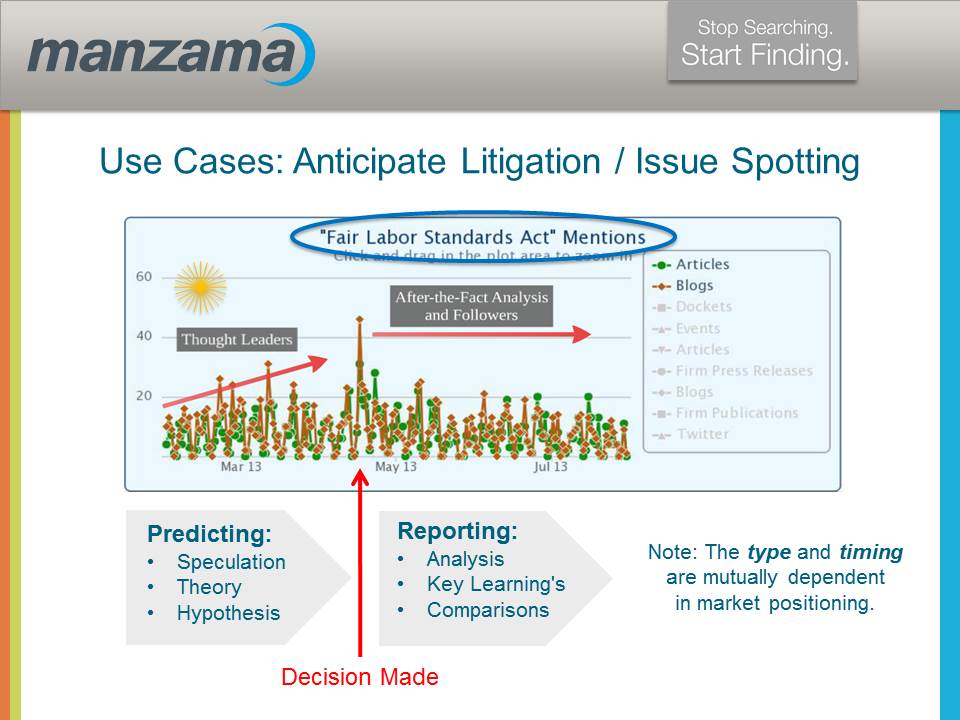
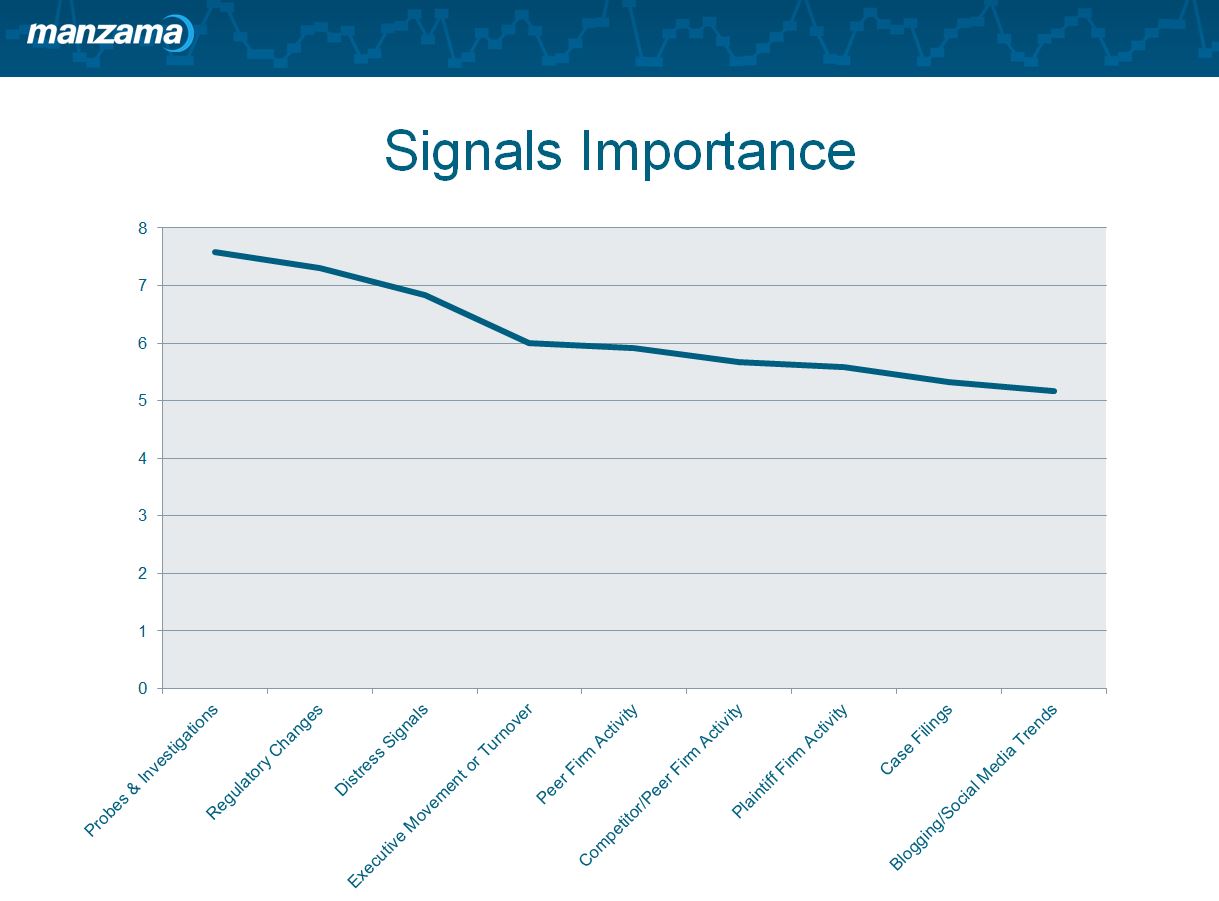
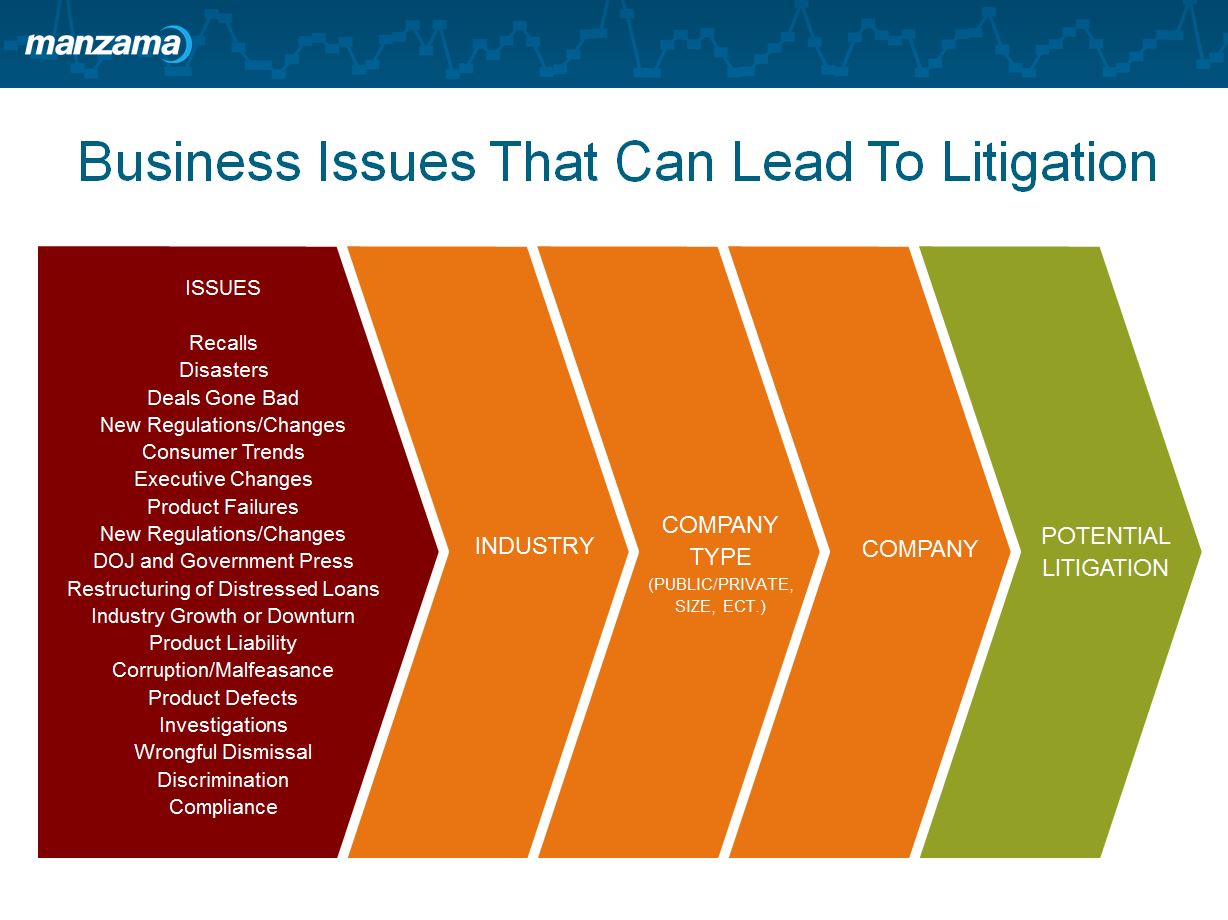
I never imagined this would be possible in my lifetime… but here I am today writing a post about a product called Signals. A company called Manzama  is developing Signals and working with a handful of law firms to develop and refine  algorithms which will tease out patterns  and momentum from exabytes of news  stories, public records, court filings and social media posts  to generate predictive signals. These custom “signals” will alert law firms to  leading indicators of risk and opportunity  for business development. Today everyone consumes the same headlines.  Manzama wants to provide an “early warning system”  by monitoring the “vital signs” of individual companies or industries. Basically we are talking about a product which will enable law firms to pitch a client before they know they have a problem!

Over the past decade information professionals have introduced curated news platforms which  have helped to compress the lag between events and awareness. No lawyer wants to be the “last to know.” Law firms which have survived the great recession remain intensely focused increasing their market share through cross selling their services to existing clients and luring clients away from other law firms. Lawyers can not afford to miss trends and the opportunities.

What is Manzama ? Manzama has offered a “listening platform” which tracks, digests  and delivers news which is focused on companies, issues and industries of interest to individual lawyers. Manzama has been one of the first products to provide a visual trend analysis tool.

Manzama analyses trends

I recently spoke with Manzama Co-founder and CEO, Peter Ozolin. Ozolin describes his new product this way. ” The goal of Signals is to use algorithms to identify activities or indicators what signal opportunities for law firms.”  It will basically help lawyers move up the opportunity chain.

Pitch New Clients Before They Know They Have A Problem
Ozolin is planning to offer a tool which will make the law firm business intelligence functions more proactive.  Signals will employ data driven models to inform decision making. Key indicators related to a business or industry will signal that a trend is forming. Law firms subscribing to Signals will be able to plan business development activities in advance of a need. E,g, it could enable a lawyer to reach out to a client or a potential client and build a relationship before an impeding crisis explodes. Ozolin also sees Signals as adding value to existing client relationships by providing lawyers with deeper insights into the clients company, industry and competitors.


Manzama Is Tracking Risk Indicators

Manzama has hired a director of data science who is building data predictive models that will analyze patterns and momentum which converge into a unique signal – alerting lawyers to opportunity before the first news headline is written!

Manzama is not alone in the legal predictive space but they are one of the first to focus on ingesting and  analyzing a broad content landscape including news, social media, public records,  regulations and litigation to generate patterns of risk and opportunity. Lex Machina,  Ravel  and BloomergBNA are offering predictive insights  into judges and courts. Lexis is offering a legislative product which predicts the likelihood of enactment.  I plan to keep my eye on Manzama Signals as it evolves into a full fledged product offering.
.
We appear to be standing on the edge of a predictive revolution. I  predict that in 5 years predictive tools will be core to the practice and of law.

Peter Ozolin can be reached at: peter@manzama.com


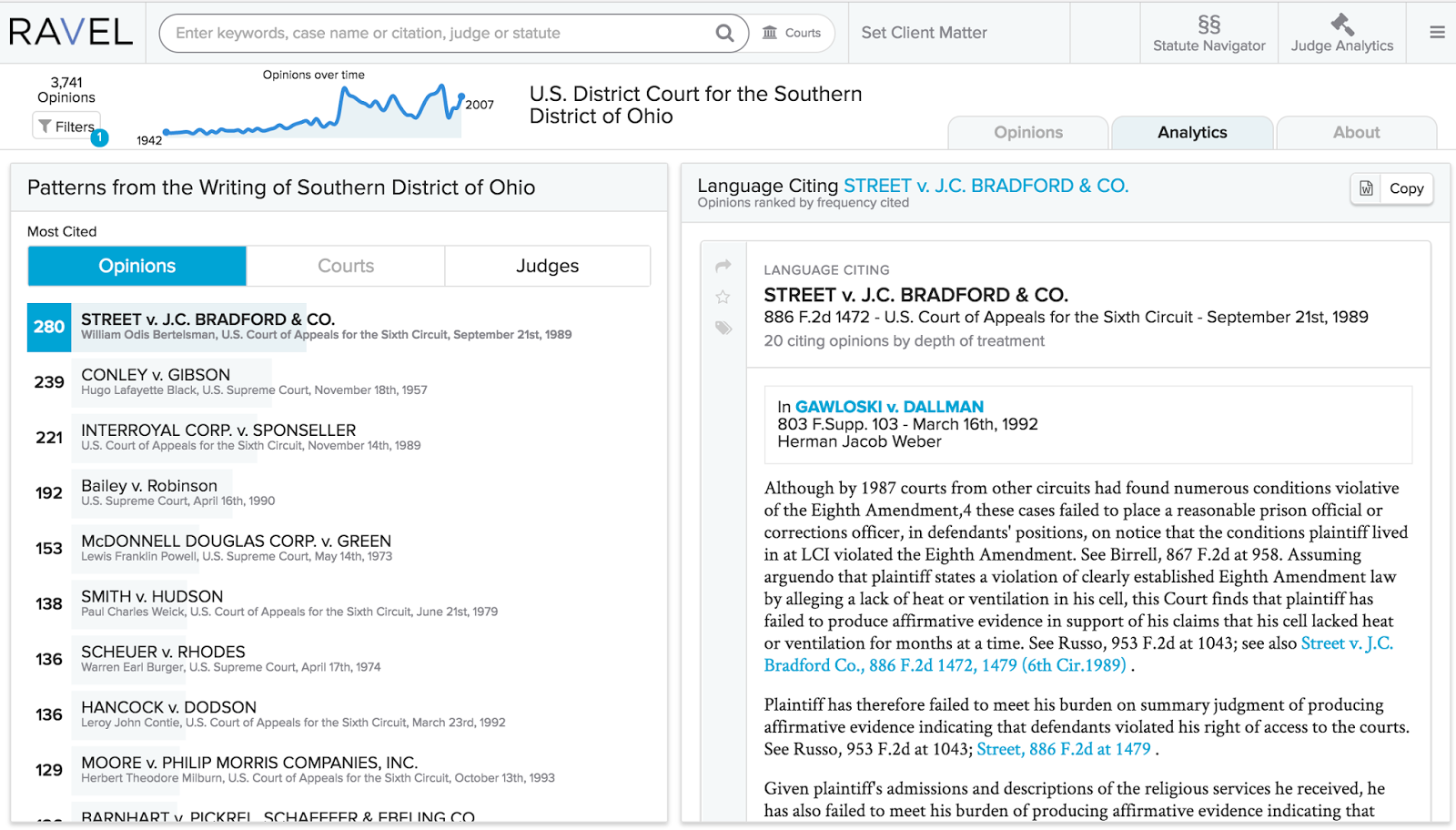
Ravel has just announced the release of a new Court Analytics feature that will be available to subscribers as an “add on” feature. Ravel will be hosting a launch webinar today Monday, Dec. 5th  at  11 am est 2 pm est and “your truly” will be providing commentary on the rise of legal analytics in legal practice.

Ravel’s Court Analytics

December 05, 2016 11:00 ET

Ravel Law Launches New Analytics for US Court System


First Platform to Offer Analytics for All Federal and State Courts
 

SAN FRANCISCO, CA–(Marketwired – December 05, 2016) – Ravel Law, a legal research and analytics platform, today announced the launch of Court Analytics, a first-of-its-kind offering that provides an unprecedented view into the caselaw and decisions of state and federal courts.
Ravel’s Court Analytics answers critical questions that litigators face in developing legal strategy. By analyzing millions of court opinions to identify patterns in language and case outcomes, Ravel empowers litigators to make data-driven decisions when comparing forums, assessing possible outcomes, and crafting briefs using the most important cases and rules. Complex projects that used to take hours or days of research can now be done in minutes, with answers that deliver richer intelligence and detail.
“Court Analytics offers law firms a truer understanding of how courts behave and how cases are tried. Attorneys can inform their strategy with objective insights about the cases, judges, rules and language that make each jurisdiction unique. The future of litigation will be different, and we’re already seeing changes — with top attorneys combining their art of lawyering with our science, to advance their arguments in the most effective way possible,” said Daniel Lewis, co-founder and chief executive officer of Ravel Law.
Court Analytics applies data science, natural language processing, and machine learning to evaluate millions of court decisions spanning hundreds of years from over 400 federal and state courts. Its features include:

  • Search and filter caselaw by court, 90+ motion types, keywords, and topics.
  • Predict possible outcomes by identifying how courts and judges have ruled on similar cases or or motion types in the past.
  • Uncover the key cases, standards, and language that make each court unique.
With Ravel’s analytical research tools, lawyers can take advantage of never-before-seen insights, such as:
  • Judge Susan Illston in the Northern District of California grants 55% of motions to dismiss, same as the district average, whereas Judge Lucy Koh grants 63% and Judge William Alsup grants just 49%.
  • The Second Circuit is most likely to turn to the 9th Circuit for persuasive caselaw, and then to the 5th and 7th Circuits.
  • Measured by citations, Judge Richard Posner truly is the most influential judge on the 7th Circuit. One of Posner’s most widely cited decisions is Bjornson v. Astrue, an appeal from a district court decision affirming the denial of social security disability benefits by an adminis­trative law judge. The most important passage of that decision is on page 644, as it deals with the Administrative Law Judge’s “opaque boilerplate.”
  • The California Court of Appeals has ruled on more than 1,000 cases that deal with the right of privacy. The two most important precedential decisions the courts rely on in such cases are California Supreme Court cases: White v. Davis and Hill v. National Collegiate Athletic Association.

Court Analytics adds to Ravel’s analytical research suite, alongside the award-winning Judge Analytics tool, which identifies the rules, cases, and specific language that a judge commonly cites, and Case Analytics, which finds key passages within cases and shows how they are interpreted. Using the Ravel platform, attorneys can gain insights customized to the unique circumstances of their case at every step of their research process. All three features are available today (www.ravellaw.com) via paid subscription (for individuals and organizations).
Ravel’s subscription-based services are enhanced by the “Caselaw Access Project,” the company’s ongoing collaboration with Harvard Law School to digitize the school’s entire collection of U.S. caselaw, one of the largest collections of legal materials in the world. Through this project, millions of court decisions are being digitized and added to the Ravel platform. This database of American law serves as an underlying data set that people can search and view for free in Ravel, in addition to using Ravel’s paid technologies to derive insights.
Ravel will be hosting a launch webcast to share more details on Court Analytics on Monday, December 5, 2016, 11:00 AM PST (2 pm EST). Register here to learn more: https://attendee.gotowebinar.com/register/7457269768975514627?source=CMS
About Ravel Law
Ravel is a legal search, visualization, and analytics platform. Ravel empowers lawyers to do data-driven research, with analytics and interfaces that help them sift through vast amounts of legal information to find what matters. Established by lawyers in 2012, Ravel spun out of interdisciplinary work between Stanford University’s law school, computer science department, and d.school. Ravel is based in San Francisco, and is funded by New Enterprise Associates, North Bridge Venture Partners, Ulu Ventures, Experiment Fund, and Work-Bench.


I have recently been  musing on the
powerful predictive insights that could be generated by  combining legal and business event data and mapping historic correlations between litigation and financial data. It is a terrible thing to be blessed with ideas and but lack the technical skills for execution.

 
Imagine my surprise when I came across a press release from
Thomson Reuters describing  a new “app” they were making available to
their financial services customers. The app uses 
legal data from Court Wire to not only alert traders to lawsuits against
companaties they follow, but the app provides historical data on market and
business events following similar litigation in the past.

 The Legal market has been using  Thomson Reuters Court Wire and competitor products to track litigation for more than a decade. Recently Thomson Reuters offered customers of their Eikon financial services product a new Court Wire app. The Court Wire application offers traders special features which are unavailable in the legal market. Court Wire app provides users with  customizable,
timely alerts and search criteria, visual movement of real-time and historical
price changes, summaries of complex legal cases, and, utilizing Eikon charting
and reporting tools, the ability to create interactive visualizations and
competitive analysis. These features are all designed to provide traders with a
streamlined and efficient workflow.

Here is the most interesting feature. According to the press release,
“The app provides automatic alerts in a trader’s stock portfolio when a
lawsuit has been filed against a corporation and charts historical data to show
how the stock prices of other companies and industries have reacted in similar
circumstances.
This analysis empowers financial professionals to make quick,
informed investments.”

What is baffling to me is that this is not simultaneously
being offered in the legal market where there is an insatiable appetite  for insights which can provide a business advantage. Is it not obvious that lawyers are also interested in predicting business as well as legal risks?

This is the total 
no-brainer. When will the similar insights be offered to the legal
market. Could not TR’s alignment with IBM Watson be used to drive deep
correlations and insights between litigation in a while I do to you but events.

I asked if Thomson Legal could comment on the CourtWire
app and find out if they planned to release a similar app to their legal
customers.

  Leann
Blanchfield, vice President, product development provided this response: “I
can’t speak to what we have in the pipeline, but I can speak to the integration
of content that has been happening across Thomson Reuters to bring relevant
data to customers from products serving professionals in other markets. A
recent example is the integration of certain business data from Eikon — part of
our Financial & Risk business — into our business development solutions,
including Monitor Suite and Business Development Premier.

This work is made possible by Open PermID, which Thomson
Reuters has been using company-wide to improve internal data federation. The
Thomson Reuters Permanent Identifier is a machine readable, 64 bit number used
to create a unique reference — which will never change over time — to a piece
of information. The PermID helps us, as well as our customers and partners,
handle data management challenges, eliminate mapping inconsistencies, reduce
operational risk, and streamline end-to-end workflow processes across various
platforms. As we discussed with you in January at our Innovation Summit, we are
also making a subset or of our PermIDs available to anyone through an open
license. 

The integration of Court Wire on the Eikon platform and
Eikon data in our biz dev products is driven by the same spirit that drove the
creation of Practice Point, a product launched this year that puts Westlaw and
forms content into a Practical Law-inspired, task-oriented solution.”

This answer does not suggest that there will be a
CourtWire/Eikon app offered to the legal market any time soon,
or at least they are not ready to say.. but let me be the first to say I think
the legal market would also welcome an app which provided insights into the correlations
and consequences of ligitation on business entities and industries following similar
litigation.
Editors of the ABA Journal announced today they have named   Dewey B Strategic to the Blawg 100,  — one of the 100 best blogs for a legal audience. In addition, Dewey B Strategic was one of the 10 blogs added to the Blawg 100 Hall of Fame,  which features “the very best law blogs, known for their untiring ability to craft high-quality, engaging posts sometimes on a daily basis.”

“For 10 years, the Blawg 100 has helped shine a light on the stunning breadth of legal topics and voices to found in the legal blogosphere,” Acting Editor-Publisher Molly McDonough said. “Journal editors have selected yet another stellar list of blogs. We hope you’ll find legal information sources in this list that are completely new to you and bookmark them for regular reading.”

Congratulations to the other Honorees including consultant friends and colleagues Ron Friedmann for Strategic Legal Technology and Jordan Furlong for Law 21– must read blogs for great insights into law firm management and innovation issues.

Law librarian honorees include, In Custodia Legis, from the Law Library Congress; The Ginger  (Law) Librarian , Jamie J Baker and Be Specific from Sabrina Pacifici.

Bloomberg Law’s Big Law Business – one of my favorite daily reads, was named to the Blawg 100 for the first time.

Thanks to Molly McDonough, Acting Editor and Publisher, ABA Journal for continuing to highlight the unique insights provided by the insomniac and obsessive  members of  the  legal blogger community

About the ABA Journal:
The ABA Journal is the flagship magazine of the American Bar Association, and it is read by half of the nation’s 1.1 million lawyers every month. It covers the trends, people and finances of the legal profession from Wall Street to Main Street to Pennsylvania Avenue. ABAJournal.com features breaking legal news updated as it happens by staff reporters throughout every business day, a directory of more than 4,000 lawyer blogs, and the full contents of the magazine.

About the ABA:
With nearly 400,000 members, the American Bar Association is the largest voluntary professional membership organization in the world. As the national voice of the legal profession, the ABA works to improve the administration of justice, promotes programs that assist lawyers and judges in their work, accredits law schools, provides continuing legal education, and works to build public understanding around the world of the importance of the rule of law.

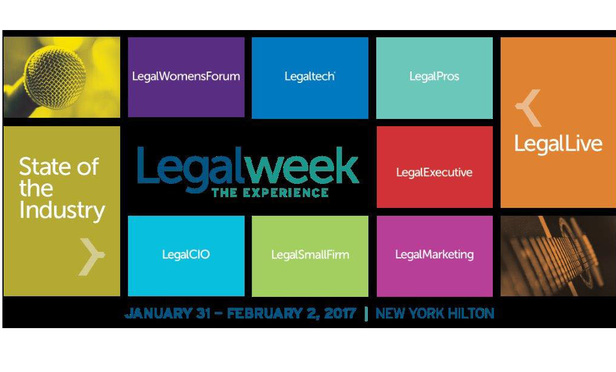
ALM will host “the largest legal
industry gathering” at an event called “Legalweek, The Experience” at the New
York Hilton Hotel,   January 31st
to February 2nd .
You may notice that this is the same
week when Legal Tech normally occurs in New York. Legal Tech is still part of
the event, but the ALM press release  describes
this as “the Inaugural Conference to address the Business and Regulatory
Trends, technology and Talent Drivers Impacting the Business of Law.”
I spoke with John
Stuttard, senior vice president of global events at ALM. Studdard explained that Legaltech
New York will remain largely unchanged as part of the greater Legalweek event
structure.  An article on Law.com  described the event  as kicking off with a  “State of the Industry” view featuring three
elements. “First, ALM’s insights team will share some of their analysis of the
industry throughout the last year. Second, a yet-to-be-disclosed “futurist”
will share thoughts about issues facing the legal market. And finally, a set of
panel discussions moderated by a TV news anchor featuring top attorneys will
discuss the previous two portions of the event.”
Over
the past few years, Legal Tech programming and exhibits have become heavily focused on ediscovery.
Studdard talked with legal vendors who expressed concern that they offer many
products which require a broader audience than those attending the traditional Legal Tech program. Studdard
has come up with a bold plan which is inspired by the fashion industry’s “Fashion
Week” which brings an entire industry together for a high profile, buzzworthy
event.
I immediately thought that the new “Legalweek”
brand had some connection to the  UK
focused “Legal Week” publication which was purchased by ALM earlier this year.
Studdard said there is no connection.

Bill Carter,
CEO of ALM described explained the Legalweek program in the press release: “The
world is on the precipice of change due to the confluence of current global
economic, technology and business trends, and the legal industry needs to adapt
in order to stay ahead of the curve. We’ve talked to our customers about their
pain points, and they told us they need help preparing for the future,
realizing operational efficiencies and effectiveness, managing a diverse talent
base and evolving client interactions.  We created this event to address
these concerns and other issues impacting their business operation in one
comprehensive forum.”


The
press release lists seven focus areas catering to specific legal professionals:
  • ·
    LegalExecutive:
    An invitation-only forum gathering the industry’s top minds to provide insight
    into how they are translating the global business trends into action and
    shaping their businesses’ respective directions.
  • ·
    LegalWomensForum:
    An interactive caucus of women working in the legal field, this area of focus
    will offer innovative ideas and solutions that lead to the retention and
    advancement of experienced women in law firms and corporations.
  • ·
    Legaltech:
    Known as the industry’s largest and most important legal technology tradeshow,
    Legaltech delves into leading legal technology solutions and showcases how the
    industry’s most successful firms are preparing for the future.
  • ·
    LegalPros:
    Law librarians, paralegals and administrators can discover innovative ideas and
    solutions that help them evolve their roles as the manager, educator and
    knowledge influencer of the legal research and litigation tools of the firm.
  • ·
    LegalMarketing:
    This focus area explores how modern forces impact the way law firms handle
    business development and provides a think tank environment for marketers to
    guide firms into 2017 and beyond.
  • ·
    LegalCIO:
    With so much changing in technology, this event fosters discussions around
    relevant opportunities and challenges impacting today’s law firm information,
    technology and knowledge management professionals.
  • ·
    LegalSmallFirm: This area of focus explores
    how technology can support efficiency improvements, client growth and scalable
    operations for small law firms.


Anyone
who registers for any of the Legalweek tracks will be able to enter the exhibit
hall and can attend the the plenary speaker events. ALM
is expecting 10,000 attendees and the exhibit hall will feature more than 300
exhibitors at the LegalTech exhibit hall.

In addition
to the seven focus areas,  programming will include keynote presentations, panel
discussions, an exhibition floor and opportunities to network, Legalweek will
also feature live entertainment through LegalLive. Visit www.legalweekshow.com
or follow @Legalweekshow for program and speaker updates, as well as to submit
requests for sponsorship and/or speaking opportunities.

After 13 years Fastcase is getting a
makeover. Over the past few weeks  Fastcase has been rolling out Fastcase
7 to the 27 bar associations which provide Fastcase  to their
members.  Tomorrow they are launching Fastcase 7 for
law firm subscribers.  I have watched Fastcase grow from a beta
platform to a serious legal research platform with more than 800,000 subscribers.
The new Fastcase 7 interface will start out as a new option  which
customers can  choose to access from the  “classic” home
screen.

The Fastcase 7 Home Screen


Ed Walters, the CEO of Fastcase  provided this
rationale for the phase in of Fastcase 7. “We’re moving people’s cheese,
and we know that can be a difficult transition, so we’re doing it slowly.
The plan is to have people log into the classic Fastcase interface by
default, with the ability to toggle to Fastcase 7, as a start.  After
about 6 months, when we know that people like Fastcase 7, we’ll flip the
default.  Users will log in to Fastcase 7 by default, with a toggle to go
back to the classic Fastcase interface.  After about a year’s transition,
we’ll phase out the toggle to the classic version. ” But Walters isn’t
tied to any specific timeline. ” These aren’t hard and fast deadlines
for the roll out…  If people need longer to feel comfortable, we
can extend; if everyone loves Fastcase 7, we can accelerate.” Both
Fastcase classic and Fastcase 7 are built on the same search platform – even
though the look and feel are very different.

Walter’s expects it to be a smooth transition. Fastcase 7
includes all of the most popular Fastcase classic features: copy with citation, dual-column printing, integration
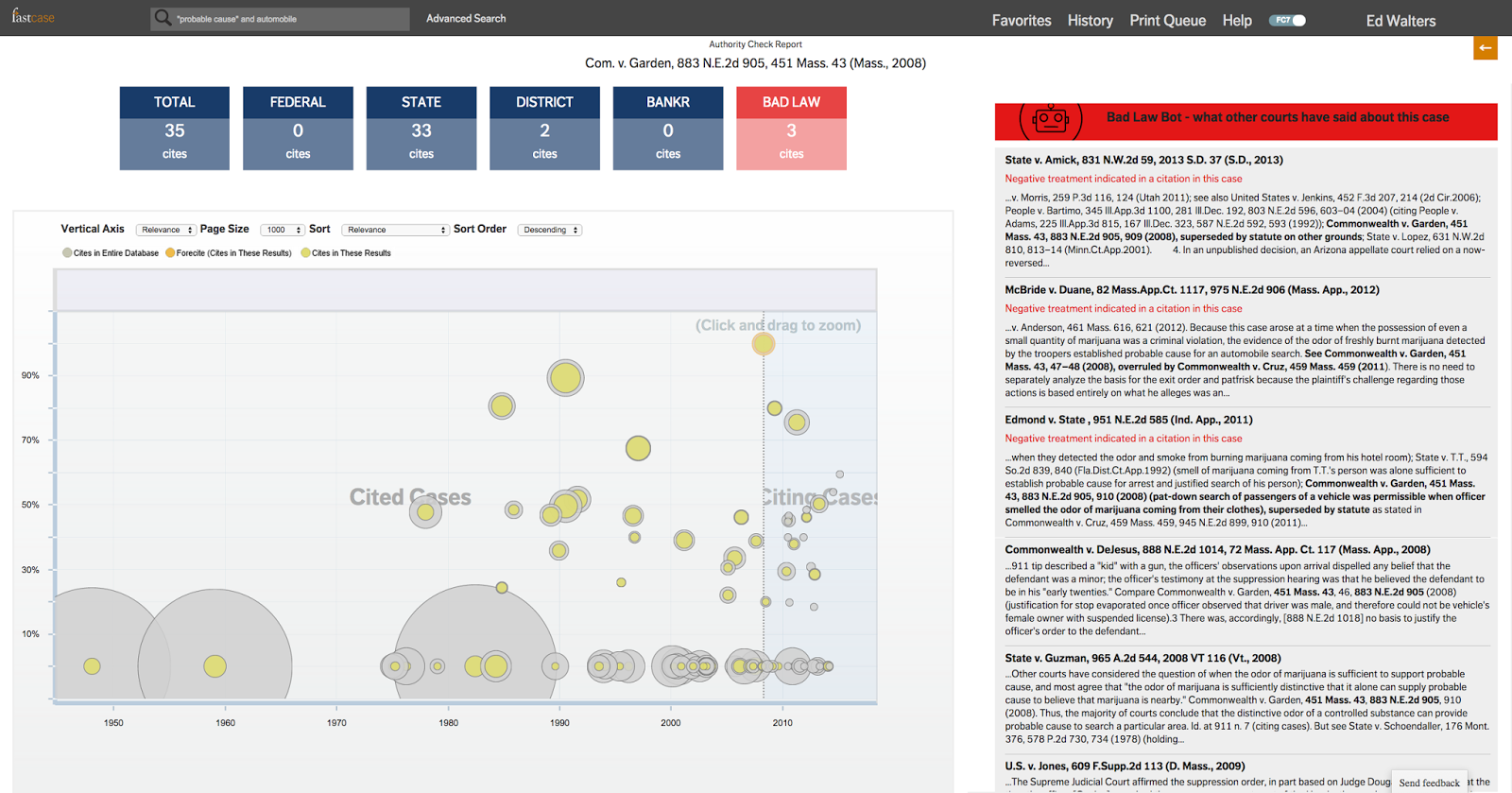
with HeinOnline and Clio, batch printing, Bad Law Bot, annotated statutes. He also outlined for me some of the highlights of the new Fastcase 7 platform.


Training Resources. The first time a subscriber logs in to
Fastcase 7, there’s an animated, guided tour which can be re-run it at any time
by selecting Guided Tour from the orange Help and Support resource center on
the Fastcase 7 home page. There is in fact, a whole suite of training materials
– user guides, how-to videos, lesson plans for teachers, problem sets, even
crossword puzzles for training people on the new Fastcase 7.   All of this
can be found at https://www.fastcase.com/education/.
Some of these are designed for self-guided instruction, but many are designed
for law librarians and legal research professors to use as teaching
aids.  There is also a free Fastcase 7 webinar series (more info
here: http://www.fastcase.com/webinars/)

The New Look  The original Fastcase was designed to be
used on the low-resolution, square 4:3 CRT monitors of the 2000s era. Fastcase
7 is designed for high-resolution 16:9 wide-screen displays. Walters who is
a bit of a
“typography nerd”  took great care in
selecting the colors, fonts, and sizes  to assure that  everything
is very easy to read.   The Kepler font was chosen for case displays so
that they look like they’re printed on a page.  According to Walters,
Kepler originated in legal publishing, and “tests showed that it was very
easy on the eyes, which is especially welcome when doing legal research for hours
on end.”

The Fasecase 7 Plaform in Action


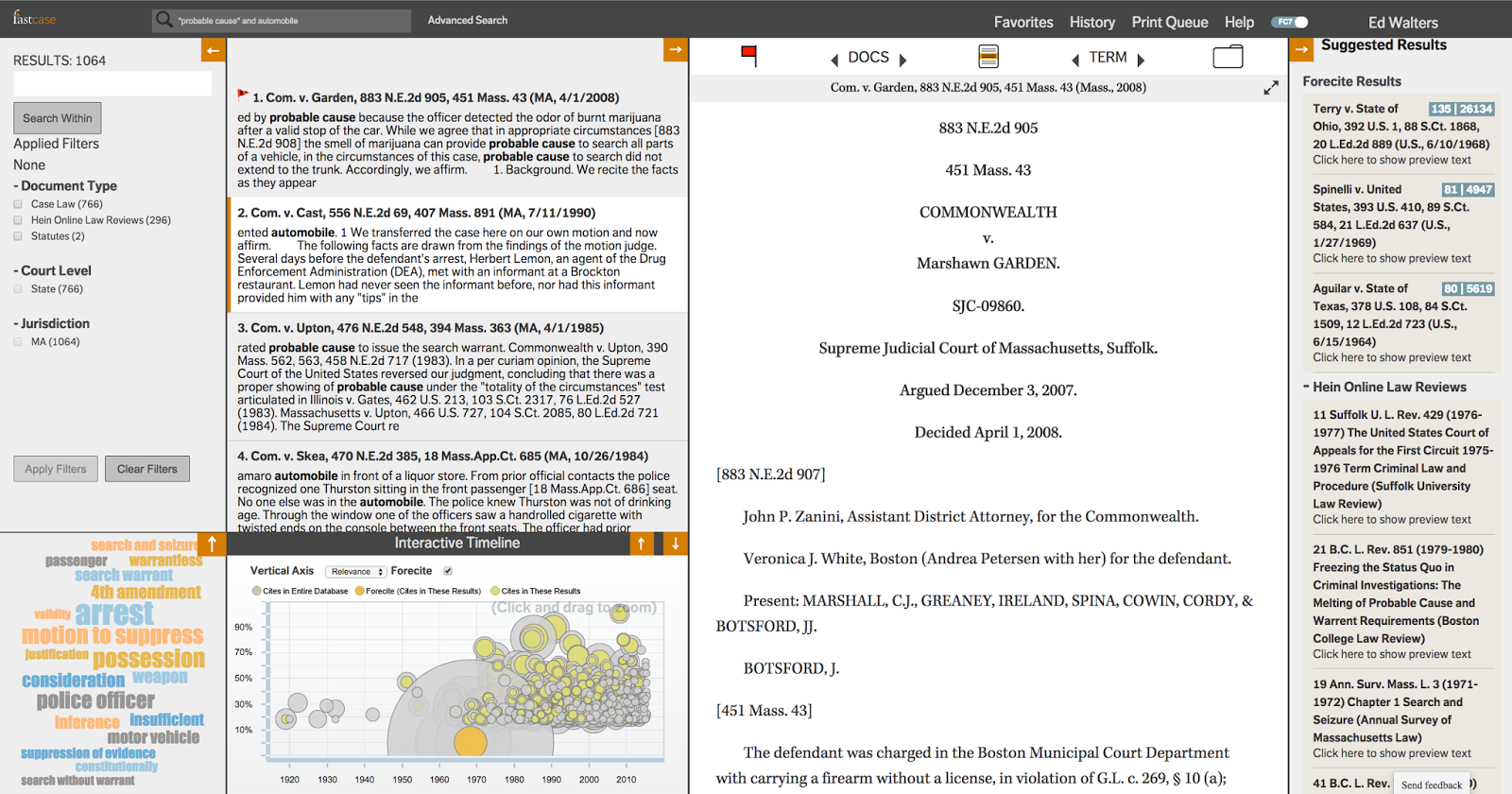
 Highlighting the Interactive Timeline. I have always
been baffled that interactive timeline  feature was not front and center on
Fastcase. Fastcase 7 finally moves   The Interactive
Timeline to the front of the results page,  to assure that more
people can see the  data visualization tools.  Walters
acknowledged the misstep of having  “invented data visualization for
legal research in 2008, and cleverly hid it on a tab behind search results,
where nobody would ever find one of our coolest features.”


Global Search. Fastcase started out as a caselaw service,
but over the years they have expanded to include almost 40 million documents which
include statues from all 50 states, the U.S. Code, current regulations for most
of the 50 states, the CFR and every law review article ever published in America
from  their partnership with HeinOnline and much more.  On Fastcase
7, subscribers  can search across all data types with a single
search, and filter down with facets on the results page.


 Advanced Search  The advanced search page
is full of “power tools for power users.” Walters is trying
to empower researchers:”So many people are going to the Google model
for legal research – one box and a billion results.  That’s awesome for
the Web, when you’re looking for one thing, but terrible for legal research ,
where you’re searching for lots of things, or to see that nothing of a certain
type exists.  Google-like legal research runs the risk of infantilizing
legal researchers — we’re trying to empower great legal researchers.”

 Source Selection.  On Fastcase
7,  users can choose from recently searched libraries, or a fixed list of
libraries from a state of  their choosing or select from a big type-ahead
list of all possible jurisdictions.

“Goof-proofing your research.”  Fastcase has
offered the Forecite features for years. Forecite uses deep citation analysis
to identify caselaw which is relevant but not explicitly linked
through specific citations or keywords.  This feature has been expanded
to search all the libraries and data types  and suggests additional
resources that might be useful.


Add caption

 The Quantum Interface. Walters describes Fastcase 7 is
a single-page app. The page does not reload every time a link is
clicked.  Search results are “bottomless” and all on the same page which Walters describes this way;” Fastcase
7 has a quantum interface: instead of switching pages on the app, all of
the pages exist on every page, behind the scenes – they pop in or resize
themselves, so you don’t need to keep reloading the pages.”   It’s elegant,
fast, and  according to Walters it’s the only single-page app in legal
research.


The Walters Doctrine of Pricing and Innovation:
“Innovation isn’t a new product that law firms should pay more for.
It’s table stakes for legal tech companies.  We innovate as a part
of doing business, and it should be included in the price, not serve as a
justification for a price increase.  Firms love putting Fastcase in the
budget, because they always know what it will cost, with no exceptions,
ever.”  There is no price increase for Fastcase 7!


The Public Beta.  Walters regards Fastcase 7 as a
public beta. Users are encouraged to report any issues  using the
Feedback link on the bottom right of every page.  Fastcase will continue
their product development efforts on Fastcase 7, and  subscribers should
continue to see improvements during calendar 2017. ” We’re an agile
software development shop, which means there’s a new release of Fastcase every
month.  Tell us what you like, or what you hate, and we’ll make
improvements.”


 OK Walters sounds a bit like a new father handing out
cigars: ” We work hard to build beautiful, innovative software, and we’re thrilled
with Fastcase 7.  It’s the most powerful, most intuitive, most elegant
legal research software ever built, and it will only get better from here.
I hope people love it as much as we do!” … But who can blame him for having a passion for excellence in a product he and his co-founder Phil Rosenthal have  been building  for more than a decade Congratulations  to Walters and his Fastcase team on the
launch of Fastcase 7!
When Lex Machina was acquired by LexisNexis last year, the company promised that the huge Lexis data archive would be leveraged to expand Lex Machina beyond its original intellectual property
offerings. Last summer they announced the launch of a securities analytics product. Today they are announcing the launch of an antitrust analytics product.The new module will enable litigators to ask new questions and gain new insights based on a data generated by more than 7,800 antitrust cases which have been active since 2009— those cases have already resulted in $20 billion in damages awarded. Like its predecessors. the platform allows a lawyer to generate custom insights into trends in antitrust case timing, resolutions, finding, damages, remedies, opposing counsel, law firms, parties, judges and venues including multidistrict litigation cases.

“In antitrust litigation, where potentially billions of dollars and companies’ entire futures could be at stake, Legal Analytics for Antitrust helps law firms, in-house counsel and government attorneys develop winning case strategies and data-driven arguments based on the outcomes of thousands of prior cases,” said Josh Becker, CEO of Lex Machina. “The power of Legal Analytics truly becomes apparent in multidistrict litigation where unraveling some of the more complex cases could encumber attorneys for months, instead of finding the desired insights in minutes.”

New Features:

·
Expanded case
coverage
: Attorneys can now analyze federal cases brought under the Sherman
Act, Clayton Act, Robinson-Patman Act, or Federal Trade Commission Act.


·
New data source
and case linking:
Existing Lex Machina case data is integrated with data
from the Judicial Panel on Multidistrict Litigation to provide accurate MDL case
counts. The platform also links procedurally connected cases to let attorneys
analyze them in the right context.


·
Antitrust
findings analytics
: New tags for Class Actions, DOJ/FTC Enforcement cases,
Robinson-Patman Act price discrimination cases, and cases where counterclaims
were asserted.


·
Enhanced case
timing analytics
: Added
median days to Dismissal, Class Certification and Summary Judgment Orders —
useful for budgeting, resource allocation and legal strategy.

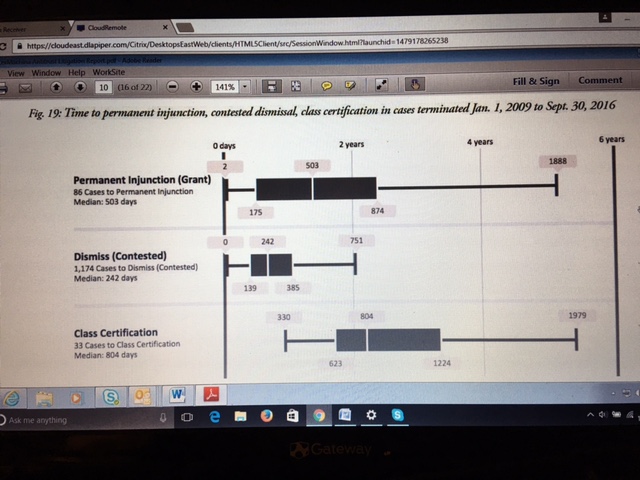
The Report Lex Machina has also underscored the importance of the launch by releasing a report chocked full of high level data and insights based on all antitrust cases filed since 2009:

Time to Injunction, Dismissal, Class certification

·
Judge
Marianne Battani of the Eastern District of Michigan has handled the most
antitrust cases (393 cases) since 2009 – more than twice as much as the next
leading judge.

·
The top
defendants since 2009 include financial institutions like JPMorgan Chase &
Co (270 cases), Goldman Sachs & Co (192 cases), UBS (188 cases), and
Deutsche Bank (185 cases); electronics companies like Panasonic (265 cases) and
Hitachi (253 cases), and several airlines such as Delta (231 cases), American
Airlines (212 cases), Southwest (211 cases), and United Airlines (206 cases).
·
Cotchett
Pitre & McCarthy is the top law firm representing plaintiffs (255 cases),
followed by Miller Canfield (248 cases), and Spector Roseman Kodroff &
Willis (236 cases).
·
Latham
& Watkins (340 cases), Gibson Dunn & Crutcher (334 cases), and
Freshfields Bruckhaus Deringer (294 cases) are the top law firms representing
defendants.
·
The
median time to the grant of a permanent injunction is just under a year and a
half (507 days).Judgments
favoring the defense side (especially findings of “no antitrust injury,” “no
sherman act violation § 1 (restraint of trade), and “no sherman act violation §
2 (monopolization) tend come from judges – either as a judgment on the
pleadings, or as a summary judgment.


·
Judgments
favoring the defense side (especially findings of “no antitrust injury,” “no
sherman act violation § 1 (restraint of trade), and “no sherman act violation §
2 (monopolization) tend come from judges – either as a judgment on the
pleadings, or as a summary judgment.