Yesterday American Lawyer Media Legal Intelligence released the 2012 Law Librarian Survey data.

The ALM research staff has worked closely with the Private Law Library community to improve the precision and relevance of the questions presented in this survey.  I look forward to the release of the American Lawyer article interpreting the data and the commentary received from the library community. (Thanks to Nina Platt for pointing me to the link added above.)

All ALM Reports Are Not Created Equal. ALM’s timing was impeccable because I was still pondering an appropriate response to another recent ALM report  “Finding the Right Balance: Non attorney Staffing in Law Firms.”  My working title for the post was “Lies, statistics and asking the wrong questions to the wrong people.” The problem with that report was that it purported to be measuring the strategic value of library services in law firms. However the vast majority of the firms (76%) who responded were too small to have a professional librarian let alone a library that was staffed to provide strategic value.  Yet they asked the question and they reported the response which — no surprise– indicated that these non-staffed libraries were not delivering high strategic value.  As my kids would say “D-u-u-u-u-h.” The bigger question is – why weren’t the editors of that report talking to the editors who were  hard at work crafting the annual Law Library Survey to find out about asking a qualifying question such as ” Do you have a professional librarian?” If not skip the rest of the questions about library services.

A Sampling of Key Trends From the 2012 Law Library Survey:

Librarians: AFA/Insourcing Trend in Practice Support


Firms appear to be recognizing the value and expertise of research staff in delivering lower cost/ high value results to clients. The trends in the 2012 survey reports:
  • 2011 saw increases in billable rates for research staff
  • In 2011 there was a 25% increase in researcher billable hours over 2010
  • There was a corresponding 25% increase in average revenue generated by the research staff in 2011.
  • 59% believe they are performing work formerly done by associates.

Outsourcing and Centralization

Library Directors are spearheading initiatives to streamline library operations through centralization and outsourcing administrative operations. The trend continued to increase in 2011.

  • 91% centralize digital content procurement
  • 91% centralize cataloging and library systems
  • 81% centralize acquisition of print resources
  • 68% report outsourcing at least one function

Research Support

64% of respondents report the centralization of research. It is not clear how many are referring to a centralized staffing location or alternatively to a virtual centralization which creates a unified workflow across multiple locations. But one obvious benefit of centralized virtual research is expanding the hours of coverage by taking advantage of time zone differences. Additional research support findings include:

  • 56% report that the Library is the main source of competitive intelligence.
  • 52% report that the library is the main source of marketing research
  • 14% have begun “embedding” librarians as specialists assigned to specific practice groups.

The Long Slow Death of Cost Recovery

In 2008 70% of the firms reported that they recovered more than 60% of their online costs in client charges. This number decreased a whopping 41% in 3 years. Only 29% reported recovering more than 60% of their online costs through chargebacks.

Budgets Recovering

For the second year in a row there was a double digit increase in the number of libraries reporting that their budgets had increased. This year 55% of firms were increasing their budgets, up from 41% in 2010 and 30% in 2009.

New Issues and Questions

  • Bloomberg was treated as a peer to Lexis and Westlaw in the questions about online research costs.
  • Adoption of Online Monitoring products, news aggregation products and Integrated Library systems were queried for the first time.
  • eBook purchases increased 8%. In fairness the products and pricing regimes are not completely resolved as of 2012 so we need to keep watching this one.

Library Director’s Rule Contract Negotiations

Firms recognize the special expertise of Library Directors in high ticket and complex licencing negotiations. 96% of the firms have kept this responsibility in the hands of the Library Director. It is unfortunate that this is the first year the survey addresses this question. Consultants which were “the rage” several years ago take the lead in only 3% of the firms responding. It may be that the extra cost of the consultant did not offer a true “value proposition.” The presence of consultants may be further diminished if more vendors follow the Bloomberg Law lead and establish a single price formula for all subscribers.

There is a lot more detail and many other issues addressed in the full report. I look forward to the ALM Survey presentation at the upcoming AALL Annual conference in Boston.

The latest edition of Practice Innovations from Thomson Reuters was just released. This issue  includes my article on The Future of eBooks in Law Firms and the Future of Libraries  as well other articles on cutting edge topics.

Other articles include:

Read and learn.

I have recently been puzzling about how to use iPads to improve service delivery. Who knew I would get some insights on a trip to the grocery store?


Safway’s New Customization Initiative


My local Safeway was introducing the “Just for u” program. They positioned an employee holding an iPad near the store entrance. They were, in other words initiating a strategic intervention, to encourage shoppers to personalize their shopping profiles. Of course they could badger me with emails, which I likely ignore, but by placing a human being holding an iPad (i.e. ready willing and able to help) in my path, they got my attention. The Safeway employee was able to build my custom “Just for u ” profile. and able to download the app right onto my phone in about 2 minutes.  I will get alerts when my favorite products are on sale, ,they will load coupons and special deals  on my loyalty account and I walked away with a free carton of eggs as a bonus for signing up.

If we had researchers and KM professionals conduct outreach using  iPads, what initiatives should we promote? Some of the possibilities include:

  • Demonstrate ebook features with the goal of migrating lawyers off of print
  • Convert lawyers from print to digital newsletter delivery
  • Demonstrate new KM drafting products 
  • Roving research. Answer research questions 
  • Provide “just in time” training
  • Interview lawyers to create custom information profiles

 But the Safeway “Just For U” initiative focused my attention on the endless challenge of  improving and updating personalized news and legal monitoring for lawyers.

The Myth of the End User Dashboard Customized monitoring is an endless challenge. Lawyers’ needs are not static, clients change, issues change, products change. Customized monitoring is hot. Over the past year I have fielded innumerable pitches from a variety of vendors hawking the latest and greatest custom monitoring platform. One feature that most share is based on the notion that lawyers want to l learn to manage their alerts in a customized platform. They presume that lawyers want and are willing to learn “to drive” a custom alerts platform.

The Power of Human Intervention. I fear that we are all facing a bit of “customization fatigue.” It would be daunting to even estimate how many more personalized passwords  and account setups we will all be forced create over the coming decade. The central lesson of the “Safeway experience” for me was how a simple human intervention overcame all resistance. It reinforced my gut feeling that we should recognize “dashboard fatigue” and  simply offer lawyers the option of a “chauffeur ride” to a more efficient process. Roving KM professionals armed with iPads can build more lawyer efficiency  in two minutes than a year of email reminders to “log in” to a new product unassisted.

There are two things that surprised me about the Fastcase release of advance sheets which was announced last week.

1. Faster to the ebook market. Once again  Fastcase has leapfrogged over many well established legal publishers by jumping into the eBook market. Last year at AALL, only the two largest  legal publishers LexisNexis and Thomson Reuters, were demo-ing products or prototypes. I understand the appeal of eBooks as opposed to  a digital caselaw display. eBooks provide a more appealing and book like display and user experience and also include the ability to search and highlight. 

2. But why would they pick advance sheets? Young lawyers can’t  tell an “advance sheet” from a “racing sheet.” Older  lawyers who still read them  are likely on the verge of retirement. There are more efficient and targeted ways to monitor emerging caselaw. It is estimated that US state and federal courts release 60,000 reported opinions  and another 100,000 orders and unpublished opinions each year. No one can read everything.

The Fastcase US Supreme Court Advance Sheet  does make sense because it is by definition a highly specialized publication for a court which releases the very readable 70-80 opinions a year.

My reaction to the jurisdictional advance sheets was “just because you can, doesn’t mean you should…” Online topical monitoring of newly released caselaw is  vastly more efficient than paging through an advance sheet. But if you are going to publish advance sheets as eBooks, I had to ask “why can’t we have the best of both worlds?”

So I contacted Fastcase CEO, Ed Walters to get some answers.

 Why Not Personalized Advance Sheets? I realize that in the 19th century advance sheets represented a revolution in access to caselaw, but now that courts are releasing a tidal wave of opinions and orders, lawyers can’t read all the caselaw in a single jurisdiction.  Since most online services have the capacity to monitor and filter caselaw as it is released I asked Ed Walters if he planned to develop a more customized and personalized delivery system for advance sheets. Fastcase has already added case highlights and annotations, so why not take it to the next level of personalization?

Topical Advance Sheets  In response to my inquiry, Ed disclosed that in fact Fastcase is  planning to release several other eBook series this summer, which will include nationwide federal topical compilations – the Antitrust Reporter,  Securities Reporter, FCC Reporter, and Copyright Reporter. While topical isn’t truly personalized it is a big leap in the direction of providing filtering and focus which are so badly needed as lawyers struggle against “caselaw overload.”  The topical advance sheets  will be paid eBooks. Ed expects these to be even more popular that the free general advance sheets which were released last week..

Still Walter’s believes that introducing the advance sheet as an eBook is the first step towards revolution. “One of the exciting things about designing out at the frontier is that nobody knows how people will use the products. Henry Ford famously quipped that if you asked people in the 19th Century what they wanted, they would say they wanted a faster horse. Nobody thinks we’ll be working primarily in print books and advance sheets 20 years from now, especially for primary law. So we’re going to build smarter advance sheets, smarter reporters, and begin to stock the library shelves of tomorrow. I imagine that this is what John B. West felt like in the late 1800s. It’s pretty exciting!”


Today Dow Jones released a routine “snooze” of a press release on executive changes. A roster of names I had never heard before  were appointed to key positions reporting to CEO Lex Fenwick . Toward the bottom of the list there was a name familiar to the legal community.

“Dan Hayter has been named head of institutional sales, Americas, for Dow Jones, responsible for leading enterprise sales and new business opportunities for corporate and financial markets products, including Factiva.”. Emphasis added. Less than a month ago, Dan was spearheading Bloomberg Law enterprise sales to large law firms around the US. What makes this even more intriguing is that Lex Fenwick is a former Bloomberg CEO.

Key quotes from the Press Release: (emphasis added below is my own)

Lex Fenwick: “Dow Jones has served as a trusted resource with world-class assets for more than a century,” “The dynamism and hunger of our employees around the world to win bode very well for our future. Together with ambitious investment and renewed focus, we look forward to introducing unique new products in the very near future.”


Robert Thomson, editor-in-chief of Dow Jones and managing editor of The Wall Street Journal, “Our investment plans for The Wall Street Journal newspaper will become clearer in coming days, and we will certainly be expanding our news network globally, on other platforms and in other languages


Alisa Bowen, currently general manager of The Wall Street Journal Digital Network (WSJDN), has been promoted to head of product for Dow Jones. In this role, she will oversee the company’s continued innovation with an integrated product group comprising both consumer and enterprise businesses. “We have a unique opportunity to expand our reach into new markets, new products and over new platforms.”

A little history Dow Jones vs Bloomberg

Mike Bloomberg whooped the tail of Dow Jones’ when he leapfrogged over the Telerate “ticker” product and introduced the Bloomberg financial terminal. “The terminal” was an interactive tool that made Wall Street traders smarter by giving them not only data and but a tool for analyzing f the data.

A Little History: WSJ and Factiva in the Legal Market

Back in the day of 300 baud modems and acoustic couplers, there were no full text digital news products. The New York Times has it’s Infobank, which included abstracts but no full stories. Dow Jones released a remarkable news product Dow Jones Interactive which made heroes of librarians who could search “full text” news stories and mine for historical stock quotes using arcane commands that read like Fortran code.  DJIS was replaced in 1999 by Factiva a joint venture between Dow Jones and Reuters.

Factiva was, and probably still is a wonderfully sophisticated  research platform. Its complex taxonomy allowed highly precise and sophisticated searching and alerting. For many years law librarians had the best of both worlds they could have a Factiva account for their advanced search needs and the Wall Street Journal in full text was available directly to lawyers through Westlaw. Westlaw held an exclusive contract for WSJ and Factiva until 2005 when Factiva entered into an exclusive deal with Lexis. This is the reason I can’t comment on Factiva in 2012… I have been barred, the entire community of law librarians, the entire legal profession… have all been barred from accessing the Factiva platform since 2005.

I attended a launch event in which Clare Hart, President and CEO of Factiva and several Lexis executives assured the law library community that all of the Factiva functionality would be available on Lexis. The content was all there – the functionality was not.

Unprecedented Restrictions and Impaired Research

The Lexis – Factiva deal had a much more draconian impact on law firm research than the prior Westlaw exclusive. Not only was the Wall Street Journal and Factiva content pulled from Westlaw, but all other avenues of access to Factiva were also cut off. Law firms were barred from getting everything from an enterprise contract for the Wall Street Journal Online to a handful of Factiva accounts for the research staff.  If you are not a Lexis subscriber there is no easy way to conduct archival news research in the Wall Street Journal. Pieces of the WSJ and Factiva  archive must be searched on 3 different platforms, but if you are a lawyer or a law firm employee you are not a”permitted user” for any of these products. While all the world evolves toward efficiency – Factiva has devolved into fragments. Did Factiva lose interest in the product because it was so heavily subsidized by the Lexis deal?

The fact is that “Factiva on Lexis” never provided an adequate substitute for native Factiva. Librarians are the researchers of last resort in a law firm. They get the nasty complex requests which have driven the average lawyer to despair. Librarians are not charged with getting “something” on a topic. they have to get an exact thing. Sometimes the deep faceted geographic and corporate taxonomies uncover precise results that can not easily be surfaced from a news dump. Factiva taxonomies uncover relationships not just keywords.

Just Plain Wrong. I just think there is something wrong with any deal that restricts any profession or group of people from making their own choices about what tools and resources they can access. It seems especially pernicious that access to news, the very centerpiece of the First Amendment can be denied to lawyers– the professionals who are responsible for the effective administration of justice, and protection of First Amendment rights!

The Next Chapter Should Be Interesting

Today’s press release includes numerous references to “driving new products and new platforms to enterprise clients.” Will CEO Lex Fenwick, steer Dow Jones toward a more Bloomberg-like model and sell their proprietary content and platforms directly to law firms. Will they let Lexis. Westlaw and Bloomberg engage in a bidding war to gain an exclusvive contract or will they take a new direction and sell content to all three vendors?

Let’s hope that the executives at Dow Jones renew their interest in serving the legal community directly. If they want to provide their content through Lexis,ThomsonReuters or Bloomberg, fine! But let us have an end to the type of “restrictive covenant” that has essentially deprived the legal profession of unfettered access to news content on the platform of their choice.

Related posts: Welcome to Bloomberg Law: No Deals No Discounts No Apology
No Soup for You: Are Legal Publishers Using a Seinfeld Episode as a Business Strategy?

Joan Axelroth of Axelroth & Associates and I  will be co-chairing the 3rd Annual Private Law Library Summit: The Path to 2020: A Vision for Change, on Saturday, July 21, 2012, Boston, MA. Link here to see the full Summit Agenda.


Jordan Furlong

Our keynote Speaker is Jordan Furlong who will address “Climbing the Value Ladder: Rethinking the Law Library on the Road to 2020.”
Jordan  is a lawyer, speaker, and consultant based in Ottawa, Canada. He is a partner with the global consulting firm Edge International and a senior consultant with legal web development company Stem Legal Web Enterprises. Jordan’s website Law21 is subtitled: “dispatches from
a legal profession on the brink.”

His presentation will focus on how librarians can respond to, and leverage , the extraordinary changes in the legal marketplace. Jordan will provide insights into recent market events such as the collapse of Dewey and LeBoeuf and identify emerging trends in the legal marketplace which will shape our roles tomorrow.

I recently had a chance to pose a few questions to Jordan in anticipation of the PLL Summit.

1. What do you see as the greatest threat to private law firm librarian and knowledge professionals?

JF – Law firms are figuring out that they need to do a much better job of managing everything about their business. That includes people and projects, but it mostly concerns costs. Revenue growth has slowed or stalled, so costs need to come down as well, in order to preserve partner profit. That’s all fine, as far as it goes. The problem is that lawyers tend to shrink or cut anything whose function or value they don’t really understand. So if your lawyers don’t clearly understand the work or perceive the value of your library professionals, you’ve got cause for concern. You need to find ways to move at least some of your efforts from the “cost” to the “revenue” side of the ledger.

2. What sorts of concerns do law librarians now face in law firms?

JF – There’s a growing (and dangerous) perception in some firms that “Lawyers can do their own research,” or “We don’t need to pay people to look up cases.” If that’s how your people are viewed, you need to immediately change the narrative. You have to re-frame your department as an indispensable provider of higher-value service. Everyone in the legal market is being forced to climb one or two rungs higher on the value ladder. Lawyers are having to expand beyond their traditional process and content production functions. Equally, librarians need to expand (and need to be seen expanding) beyond their traditional research and knowledge support functions.

3. So how can librarians adjust their mission to enhance their value to law films?

JF – I tell lawyers that they can start climbing their own value ladder by figuring out which basic tasks they can delegate, unbundle, outsource or automate; what’s left over are the higher-end services that clients are willing to pay for. The same goes for law librarians: use databases, software and templates to replace some of your knowledge work, and train lawyers to do some of their own research work. Once you’ve helped firms to improve their internal processes and apply their lawyers’ knowledge more effectively, you can start upgrading your own functions and raising your own value. I’ll describe some of these strategies during my keynote at the Summit.

Read more of  Jordan’s thought provoking ideas at: Law21

The PLL Summit costs $145. This fee includes a reception Friday night, continental breakfast and a  lunch where you can network with colleagues/ thought leaders as well as day full of exciting programming. Register here.

Academic, Government/Court, Private Firm and Corporate law libraries are invited to participate in a survey about  their  organizations adoption of LexisAdvance,Westlaw Next and Bloomberg Law for the upcoming AALL program
The New Generation of Legal Research Databases
on July 22, 2012 in Boston.The Deadline for the survey has been extended to June 30th.

Here are links to the three surveys:

The program is a follow up to the lively discussion  about the strengths and weaknesses of these new platforms which was held at AALL in Philadelphia. The survey results will be discussed at the program. in July.  All three vendors have agreed to have representatives including product developers at the program in Boston.

One Survey Per Institution We are requesting that the Director of each library designate one person to respond to the survey.

Survey Results will be reported here after the AALL presentation.

Related Posts: Next Generation Legal Research Databases: Private Firm Survey


Bloomberg  Law entered the legal information market striding to a different drumbeat, and they continue to be delightfully contrarian. First they shunned  the traditional cost recovery model for online research,  then they added a raft of BNA content at no additional cost to subscribers. Last week they quietly retreated from their debut pricing plan.

When was the last time a vendor sent you a letter advising you that they had just lowered your contract price? In unison we shout “never!” This is something that I think we can file in the “when hell freezes over” drawer.

And yet…. that exact thing happened last week Bloomberg Law subscribers  were advised that Bloomberg Law had lowered the contract price for years three through five in  previously executed multi-year contracts. True to their “everyone gets the same deal” philosophy, law firms which are currently in negotiation will be receiving the revised pricing schedule as well.

Although Bloomberg is famous for their inflexible approach to standard pricing (everyone pays the same per attorney price), at least they can be counted on to be flexible in response to market demands. And more importantly everyone gets the benefit of the new pricing model  – even those to  whom Bloomberg has
 no legal obligation to offer a price reduction.

Related Posts:

Welcome to Bloomberg Law No Deals No Discounts No Apology
Welcome to MORE: On Bloomberg Law. BNA Debuts on the Blaw Platform

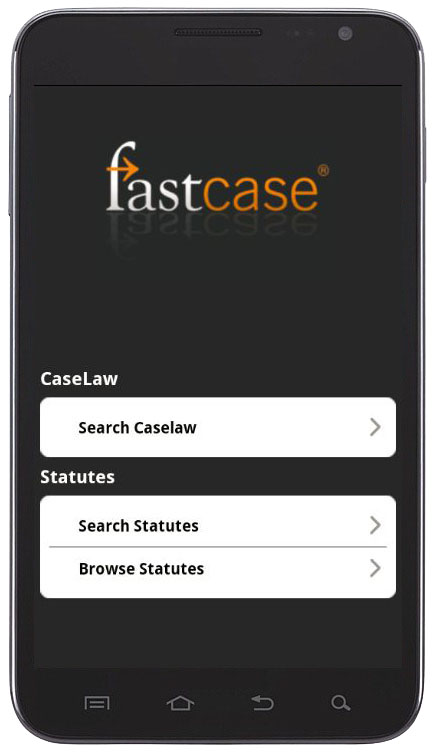
First it was iPad, and iPhones, then it was cloud printing. Tomorrow it’s the Droid.  Fastcase runs to it’s own drumbeat away from the mainstream research providers. As the big three legal providers (Lexis, Westlaw and Bloomberg Law)  harden their digital bulwarks against free or low cost access, Fastcase keeps opening new avenues to free research. Tomorrow their free app allowing free caselaw and Statutory  research will be available on yet another platform for Android phones.

On Friday,Ed Walters  The CEO of Fastcase allowed me to have a demo of their new Droid research app.  Ed expects  downloads of  Droid app to exceed the 10,000 first week downloads for the iPhone app.
The timing is even more interesting because of the recent market events which are putting the future of Blackberry maker Research in Motion in doubt. Until recently Blackberry had a clear lock on the law firm market. This morning there were numerous stories that RIM may have entered a death spiral.  If RIM does collapse,the law firm smart phone market will be up for “grabs” and new users may flood into the iPhone and Droid markets.

What I like about the Fastcase App

Registration is required to download the app but the app is free. You get access to 50 state and federal case law which can be searched using keyword or natural language. You can limit searches by jurisdiction and by date. Statutes also cover federal and all 50 state jurisdictions and can be browsed or searched.
It is easy to download and easy to use. It includes their citation analysis tool. You can beat the FREE price! It is great for checking cases and statutes on the run and can be synched with your desktop if you are a full subscriber.

The app does not include Fastcase’s sophisticated graphical analysis tools and timelines. But let’s face it they need to hold something back for their subscribers.
Even More Intriguing…

During the call Ed let slip that Fastcase will be expanding into some completely new product areas in the coming months. I am sworn to silence for now….Stay tuned…

From the Fastcase Press Release:

About “Fastcase for Android”

This app has all of the features of the award-winning Fastcase for the iPhone app:

Smart search technology from Fastcase’s fully-featured Web-based legal research platform

Sorting: users can sort the most relevant results to the top of the list, and customize and re-sort search results

Citation: integrated citation analysis tools built in to the results list

Cost: Free to download, and free access to the nationwide state and federal library without a Fastcase desktop subscription.

Mobile Sync: Seamless integration of Fastcase mobile and desktop accounts – including firm subscribers and bar association members who access the desktop version as a member benefit. Allows printing from the mobile device, or taking desktop results on the road or to court.

Works for both Android phones and tablets.

About Fastcase and the Mobile Marketplace

According to the American Bar Association (ABA) 2011 Technology Survey, the award-winning Fastcase mobile apps are the “most-often mentioned product names for downloaded legal-specific smart phone apps” and account for more users in the legal-specific mobile marketplace (25%) than industry leaders Lexis (9%) and Westlaw (11%) combined.

Fastcase’s free apps for iPhone and iPad have dominated the mobile marketplace, winning the prestigious 2010 New Product of the Year and the 2011 Legal Productivity App of the Year awards from the American Association of Law Libraries.

Fastcase has more than 500,000 paid subscribers, partners with 22 state bar associations and numerous voluntary bars and law schools across the country.

Related posts: Fastcase: Legal Research Enters the 4th Dimension or The Little Engine that Could

 There have been some wild extrapolations of late on some of my favorite blogs regarding the meaning of  Dewey & LeBoeuf’s  unsecured “legal research” related  debts as listed in the firm’s bankruptcy filing.

 These debts are listed as follows: Thomson Reuters (owed $2.3 million), LexisNexis (owed $1.4 million.), and Wolters Kluwer/CCH (owed $650K.).

In search of the missing variables


I am no math genius but I have managed large law firm   information resource budgets  long enough to know that you can’t conclude anything about the debts listed in the filing unless you define a few more variables.This kind of competitive analysis demands more scrutiny and even  more facts. Some of the facts are unknowable at this point. But a competitive intelligence approach suggests that we conduct a “gap analysis” to define what we don’t know.

Defining the Debt

The Dewey bankruptcy filing defines the amounts above as being related to “research services.” The publishers are named but the the products.

The amounts listed  in the bankruptcy filing are meaningless without additional parameters. Some have jumped to the wild and unsupported conclusion that the debts in the bankruptcy filing  represent the annual flat contract amount for the Lexis and Westlaw online research products.

What Are the Missing Variables in the Equation?

1. Law firms don’t pay their Lexis and Westlaw bills once a year. The normal practice is for a firm to make a monthly payment. So the missing variable here is – how many months of Lexis or Westlaw payments were calculated into the total? How many months of payments were considered in default on the date of the bankruptcy?  Were there unpaid bills carried over from 2011?

2. Multiple jurisdiction, many products. Dewey was an international law firm. Lexis, Westlaw and CCH all have non-US products which separate from the main online product. Lexis has :Lexis Butterworths, (UK)  Juris Classeur (France) and Thomson Reuters offers  Westlaw UK  Sweet & Maxwell, Westlaw China , to name just a few of the non- US products. .I have no idea if Dewey subscribed to these particular products but given their footprint it is likely that there were outstanding bills for non-US content.

2.  Books Anyone? Lexis and Westlaw still publish thousands treatises and monographs. It seems likely that some of the outstanding bills are for print resources. Again – the mystery variable. How many months of unpaid print invoices might be included in the total?

3. Other Online products from Lexis  and Westlaw could include: Lexis Accurint, Lexis Atvantage, Courtlink. ,Westlaw Business,. Westlaw Monitor Suite, West KM. which could all have an unknown number of  monthly  unpaid invoices which are now considered in default.

4. Other non research products? Lexis and Thomson Reuters  each have a host of non-research products which may have been commingled with the research debt. Lexis owns Redwood Analytics and Interaction. Westlaw owns Elite accounting software and Hubbard One marketing platform..Both vendors sell a variety of litigation support products.

5. Wolters Kluwer: Many products, formats and jurisdictions.There is also no simple way to analyse the WK debt. These invoices could also include a variety of domestic and international products in multiple formats including the digital Intelliconnect platforms, Loislaw. Aspen print treatises and the traditional CCH  looseleaf services and annual codes.

Competitive Insights .I applaud the attempts to conduct this analysis, but  we need to approach this with the care we would take on an internal Competitive Intelligence project. We need to stand back and do a thorough “environmental scan” in order to identify the issues and potential data gaps which are critical to constructing this data model. In the weeks and months ahead more facts may be revealed on Dewey’s’ information resource related debts. But as of today we have insufficient data  with which to formulate an equation which could provide competitive insights into the annual pricing of Dewey’s large online research contracts.